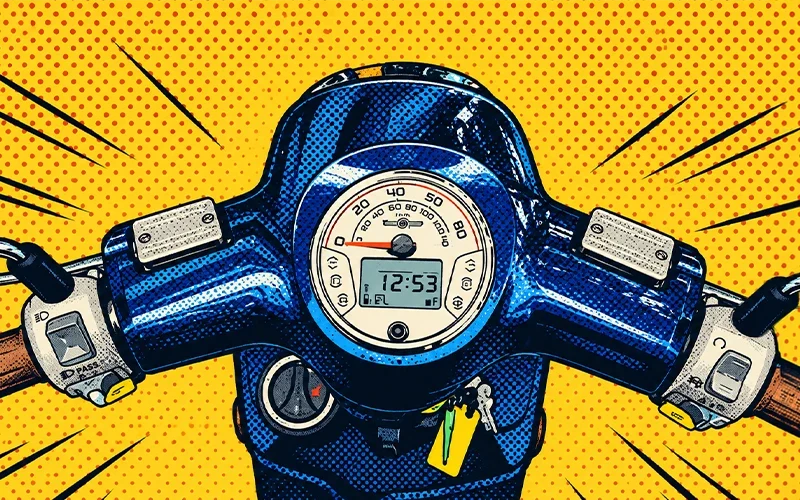
If you've ever started your scooter on a cold morning and wondered, “How long should I let this thing warm up?” you're not alone.
It's common advice to let an engine sit and idle for several minutes before riding. But do modern scooters really need to warm up that long?
Usually, no.
Most modern scooters don't need a long warm-up period before you ride. However, giving the engine a little time to circulate oil and allowing the scooter to warm up gradually is still a good habit—especially when temperatures are cold.
Let's take a look at what happens when you start a scooter and the best way to get it ready to ride.
Why Does a Scooter Need to Warm Up?
When your scooter has been sitting for several hours, the engine is cold. Engine oil has settled, and the various moving components haven't reached their normal operating temperature.
Starting the engine gets everything moving again. Oil begins circulating through the engine, and combustion starts generating heat.
As the engine warms up, it reaches the temperature range where it is designed to operate most efficiently.
That doesn't necessarily mean you need to sit in the driveway waiting for the temperature gauge to climb.
How Long Should You Let a Scooter Warm Up?
For most modern scooters, you generally don't need to let the engine idle for several minutes.
Start the scooter, give it a brief moment to settle into a smooth idle, and then ride away gently.
The important part is how you ride while the engine is cold.
For the first few minutes, avoid immediately asking the engine for maximum performance. Keep your acceleration smooth and avoid unnecessarily high engine speeds until the scooter has had a chance to warm up.
In other words:
Start it. Let it settle. Ride gently.
That's generally a better approach than letting the scooter sit idling for a long time.
What About Cold Weather?
Cold temperatures can make warming up an engine more important.
When it's cold outside, fluids are thicker, engines can take longer to reach normal operating temperature, and your scooter may behave a little differently when you first start it.
You may notice that the engine doesn't feel quite as responsive during the first few minutes of riding. That's normal.
Give the scooter some time and avoid riding aggressively until everything has warmed up.
And remember that the engine isn't the only thing that needs to warm up.
Your tires do, too.
Tires can have less grip when they're cold, so take it easy during the first part of your ride, particularly on cool mornings.
What About 2-Stroke Scooters?
If you're riding a 2-stroke scooter, you may have heard that these engines require a longer warm-up period.
Older carbureted 2-stroke engines can be more sensitive to cold starts and temperature changes. Depending on the scooter and conditions, you may need to allow the engine a little more time to settle before riding.
The same basic principle still applies: let the engine start and stabilize, then ride gently while it warms up.
If your scooter's owner's manual provides specific warm-up instructions, follow those recommendations.
What About Fuel-Injected Scooters?
Modern fuel-injected scooters are designed to make starting and running a cold engine easier.
The fuel-injection system automatically adjusts the amount of fuel being delivered to the engine based on factors such as temperature and engine conditions.
That means you generally don't need to rely on a long idle period to get the scooter ready to ride.
Start it, allow it to settle, and you're ready to go—just take it easy for the first few minutes.
Is Idling for a Long Time Bad for a Scooter?
Letting your scooter idle for a short period isn't necessarily a problem, but there's usually little benefit to letting it sit and idle for a long time.
An engine warms up more effectively under light load than it does simply sitting at idle. That's one reason gently riding the scooter after a brief start-up period is generally preferable to waiting several minutes in the driveway.
Long periods of unnecessary idling also use fuel without taking you anywhere.
And isn't the whole point of having a scooter to go somewhere?
Should You Warm Up Your Scooter Every Time?
You don't need to treat every start exactly the same.
If your scooter has been sitting overnight on a warm summer day, it may reach normal operating temperature quickly. If it has been sitting outside on a freezing morning, it will take longer.
Pay attention to how the scooter sounds and feels.
A few good habits are:
- Start the scooter and allow it to settle into a steady idle.
- Give the engine a little time before accelerating aggressively.
- Ride gently for the first few minutes.
- Be extra cautious when temperatures are cold.
- Give your tires time to warm up and reach their normal grip.
- Follow the warm-up recommendations in your owner's manual.
The Bottom Line
So, do scooters need to warm up before riding?
Yes—but probably not for as long as you think.
Modern scooters generally don't need to sit and idle for several minutes before every ride. After starting the engine, give it a brief moment to stabilize and then ride gently while it reaches operating temperature.
Cold weather and certain older scooter designs may require a little more patience, but the basic idea remains the same:
Don't start your scooter and immediately push it to its limits. Give it a little time to wake up.
Then enjoy the ride.







Leave a comment
This site is protected by hCaptcha and the hCaptcha Privacy Policy and Terms of Service apply.