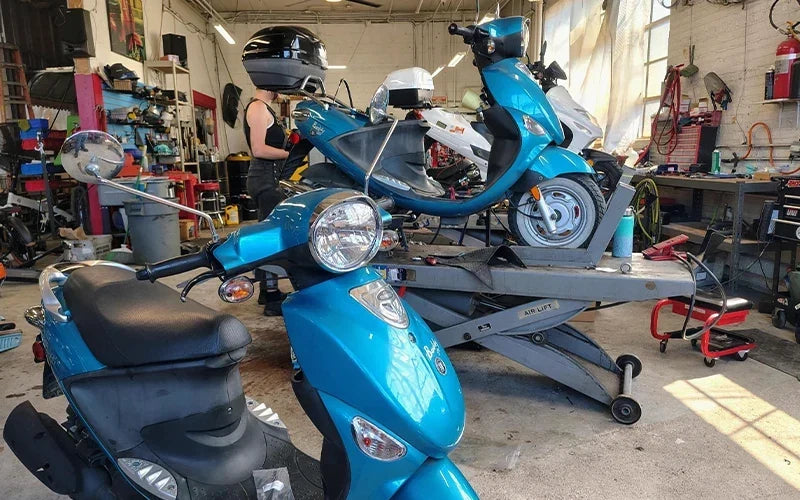
Regular maintenance is one of the easiest ways to keep a scooter running reliably, performing its best, and ready for the next ride. But how often does a scooter actually need maintenance?
The answer depends on the scooter, how often you ride it, and how you ride it. While your owner's manual should always be the final word on specific service intervals, there are some general maintenance guidelines every scooter owner should know.
How Often Should a Scooter Be Serviced?
A scooter should receive regular maintenance based on mileage, time, or whichever comes first. Even if you don't ride very often, certain fluids, tires, belts, and other components can still age over time.
For most scooters, routine maintenance may include:
- Engine oil and filter changes
- Gear or final-drive oil changes
- Air filter inspection or replacement
- Spark plug inspection or replacement
- Brake inspection
- Tire inspection and pressure checks
- Drive belt and CVT inspection
- Battery inspection
- Coolant checks on liquid-cooled models
- Throttle and control cable inspection
- General inspection and adjustment
Your scooter's owner's manual will provide the specific service schedule for your model.
What Maintenance Does a Scooter Need?
Scooter maintenance isn't just about changing the oil. A scooter has several systems that work together, and regularly checking them can help catch small problems before they become bigger ones.
Engine Oil
For 4-stroke scooters, engine oil should be checked and changed according to the manufacturer's recommended interval. Clean oil helps lubricate the engine and protect its internal components.
Some Genuine scooters use different engine designs, including 2-stroke engines. The Buddy 50 and RoughHouse 50 use a 2-stroke oil injection system that requires regular monitoring of the oil reservoir to ensure proper engine lubrication.
Need help filling the oil reservoir? Check out our guide, How to Fill Engine Oil on Your Buddy and RoughHouse 50cc Scooter, for step-by-step instructions. We've also included a video below to walk you through the process.
Tires
Your tires are one of the most important safety components on a scooter. Check tire pressure regularly and inspect the tread and sidewalls for excessive wear, cracks, or other damage.
Tire pressure should be checked when the tires are cold and set according to the specifications for your scooter.
Brakes
Brake pads and shoes wear down with use. Regularly inspect your brakes and pay attention to changes in braking performance, unusual noises, or excessive lever travel.
If your brakes don't feel right, don't wait for the next scheduled service. Have them inspected by a qualified technician.
Drive Belt and CVT
Most automatic scooters use a continuously variable transmission, commonly called a CVT. The drive belt and other CVT components experience normal wear and should be inspected and replaced according to the manufacturer's service recommendations.
A worn belt can affect acceleration and overall performance, so CVT maintenance is an important part of keeping an automatic scooter on the road.
Air Filter
The air filter keeps dirt and debris from entering the engine. A dirty or clogged filter can restrict airflow and affect engine performance.
How often the filter needs attention can depend heavily on where and how you ride. Scooters used on dusty roads or in dirty environments may require more frequent inspection.
Spark Plug
The spark plug plays an important role in starting and running the engine. Inspecting the plug at the recommended service interval can help identify wear or potential engine problems.
Replacing a worn spark plug is a relatively simple maintenance item that can help keep the engine running properly.
Battery
Scooter batteries can lose charge when a scooter sits for extended periods. Check the battery and charging system as part of regular maintenance, especially if your scooter is ridden seasonally.
If your scooter has trouble starting after sitting for a while, the battery is one of the first things worth checking.
Does a Scooter Need Maintenance If You Don't Ride It Much?
Yes.
Low mileage doesn't mean a scooter can be completely ignored. Tires can age, batteries can discharge, fluids can deteriorate, and rubber components can become brittle even when a scooter isn't being ridden regularly.
If your scooter sits for extended periods, it's especially important to follow the manufacturer's recommendations for storage and periodic maintenance.
Does Riding More Mean More Maintenance?
Generally, yes. The more miles you put on a scooter, the more frequently certain wear items will need to be inspected or replaced.
Your riding conditions can also make a difference. Frequent short trips, stop-and-go riding, dusty roads, extreme temperatures, and carrying heavy loads can put additional demands on a scooter.
That's why mileage-based maintenance schedules are best treated as a guide alongside the manufacturer's specific recommendations.
When Should You Take Your Scooter to a Dealer?
Not every maintenance job requires a dealer or professional technician. Checking tire pressure, inspecting tires, checking fluid levels, and keeping your scooter clean are things many owners can handle themselves.
More involved work—such as valve adjustments, brake repairs, CVT service, electrical troubleshooting, or engine work—is often better left to a qualified technician.
If you're not sure what your scooter needs, your Genuine Authorized Dealer can help determine what maintenance is due and identify potential problems before they become major repairs.
A Little Maintenance Goes a Long Way
Scooters are designed to be practical, reliable transportation, but they still need regular care. Following the maintenance schedule for your specific model and paying attention to changes in how your scooter rides can go a long way toward keeping it running properly.
The best maintenance schedule is the one you actually follow. Check your owner's manual, keep up with routine inspections, and don't wait until something breaks to take care of it.
Take care of your scooter, and it will be ready when you are.







Leave a comment
This site is protected by hCaptcha and the hCaptcha Privacy Policy and Terms of Service apply.