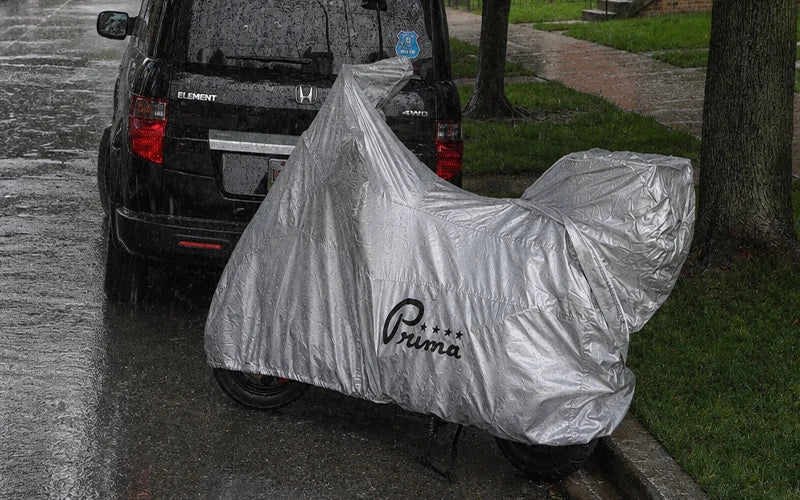
Your scooter is built to be ridden outside, but that doesn't mean it should be left completely unprotected when you're not riding.
Rain, sunlight, wind, dust, dirt, and other outdoor elements can take a toll on a scooter over time. One of the simplest ways to give your scooter an extra layer of protection is with a properly fitted scooter cover.
Whether you park your scooter outside overnight, keep it at your home during the riding season, or store it for the winter, a scooter cover can help keep your ride cleaner and reduce its exposure to the elements.
Why Should You Cover Your Scooter?
A scooter cover creates a barrier between your scooter and the environment when it's parked.
A quality cover can help reduce exposure to:
- Rain and moisture
- Direct sunlight and UV exposure
- Dust and dirt
- Leaves and other debris
- Bird droppings
- Tree sap
- Wind-blown debris
- Snow and ice
A cover can also help keep your seat, bodywork, controls, and other exposed areas cleaner between rides.
A scooter cover isn't a replacement for proper storage or maintenance, but it's an easy way to provide some additional protection.
Can You Leave a Scooter Outside?
Yes. Scooters are designed for outdoor use, but parking a scooter outside means exposing it to weather and environmental conditions on a regular basis.
If you don't have access to a garage, consider parking your scooter in a location that provides as much protection as possible. A carport, covered parking area, or other sheltered location can reduce direct exposure to rain and sunlight.
Adding a scooter cover gives you another layer of protection.
If your scooter is regularly parked outdoors, a good cover is a relatively inexpensive way to help protect your investment.
Does Rain Damage a Scooter?
Scooters are designed to be ridden in normal weather conditions, including rain. However, repeated and prolonged exposure to moisture isn't ideal for any vehicle.
Water and moisture can contribute to corrosion over time, particularly around exposed metal components. Keeping your scooter covered when it's parked can help reduce unnecessary exposure to rain.
If you've ridden through a heavy rainstorm, it's also a good idea to allow the scooter to dry when possible before covering it for extended storage.
Don't Trap Moisture Under Your Cover
A scooter cover protects against the elements, but you don't want to use it in a way that traps excessive moisture against the scooter.
If your scooter is soaking wet, give it an opportunity to drain and dry before covering it for an extended period. A breathable or appropriately ventilated cover can also help reduce moisture buildup underneath.
Always follow the care and usage instructions provided with your specific cover.
What About Sun and UV Exposure?
Rain isn't the only environmental factor that can affect your scooter.
Prolonged exposure to direct sunlight and UV rays can contribute to fading and deterioration of certain materials over time.
Paint, plastics, rubber components, and seats can all benefit from reduced exposure to harsh sunlight.
If your scooter is parked outside during the day, a cover can help block direct sunlight when you're not riding. Parking in a shaded or covered location whenever possible provides another layer of protection.
What Should You Look for in a Scooter Cover?
Not all scooter covers are the same. When choosing one, consider how and where you'll be storing your scooter.
Choose the Right Size
One of the most important things to consider is fit.
A cover should be large enough to protect your scooter without being excessively loose. A cover that's too small may leave parts of the scooter exposed, while one that's too large can be more difficult to secure in windy conditions.
Look for a cover that corresponds to the size and dimensions of your scooter.
Look for Weather Protection
If you're parking your scooter outside, choose a cover designed for outdoor use.
Depending on the cover, features may include:
- Water-resistant or waterproof materials
- UV-resistant construction
- Breathable materials
- Elastic edges
- Straps or buckles
- Reinforced attachment points
Think about the weather conditions where you live and how frequently your scooter will be exposed to them.
Make Sure It Can Be Secured
Wind can quickly turn an unsecured scooter cover into a sail.
A good cover should have a way to secure it to the scooter. Straps, buckles, elastic edges, or other fastening systems can help keep the cover in place.
A properly secured cover is also less likely to move around and rub against the scooter.
Consider Breathability
Weather protection is important, but so is airflow.
A cover that allows appropriate ventilation can help reduce trapped moisture and condensation underneath. This can be particularly important if your scooter will be covered for extended periods.
Where Can You Find a Quality Scooter Cover?
If you're looking for a scooter cover, Scooterworks USA is a good resource for finding covers in different sizes and styles.
Their scooter cover selection includes Prima all-weather scooter covers in multiple sizes, along with universal scooter and motorcycle covers designed for outdoor protection.
That makes it easier to find a cover based on the size of your scooter and how you plan to store it.
Shop scooter covers at Scooterworks USA: Scooter Covers – Scooterworks USA
Should You Cover a Scooter When It's Wet?
If possible, allow excessive moisture to drain or the scooter to dry before covering it for an extended period.
The purpose of a cover is to protect your scooter from additional exposure to the elements—not to trap water underneath it.
If you've just returned from riding in heavy rain, give the scooter some time to dry before putting on the cover.
A Scooter Cover Doesn't Replace Regular Maintenance
A cover is one part of taking care of your scooter. It doesn't eliminate the need for regular maintenance.
Even a covered scooter should be inspected and maintained according to the manufacturer's recommendations.
Regularly check:
- Tire pressure and condition
- Engine oil and other fluids
- Brakes
- Battery
- Lights
- Drive components
- Fasteners
- General condition of the scooter
Your Genuine Scooters owner's manual is the best source for model-specific maintenance information and service intervals.
How to Protect Your Scooter During Long-Term Storage
If you're storing your scooter for an extended period, especially over the winter, putting a cover on it is just one part of the process.
Consider these steps:
1. Clean your scooter.
Remove dirt, road grime, and other debris before storage.
2. Find a protected location.
A garage or covered storage area is preferable to leaving the scooter completely exposed.
3. Check the tires.
Make sure they are inflated to the manufacturer's recommended pressure.
4. Follow your owner's manual.
Your Genuine Scooter may have specific recommendations for extended storage.
5. Use a properly fitted cover.
A cover can provide an additional layer of protection against dust, dirt, sunlight, and moisture.
6. Check on your scooter periodically.
If your scooter is stored outside, inspect it occasionally for moisture, corrosion, debris, or other potential problems.
Protect Your Scooter Between Rides
You don't have to do anything complicated to give your scooter some additional protection.
A quality scooter cover is one of the easiest ways to protect your ride when it's parked.
If you regularly leave your Genuine Scooter outside, consider where you park it, choose a properly sized cover, secure it against wind, and follow the manufacturer's recommendations for maintenance and storage.
When you're riding, enjoy the freedom of your scooter. When you're finished for the day, give it some protection from the elements.






Leave a comment
This site is protected by hCaptcha and the hCaptcha Privacy Policy and Terms of Service apply.