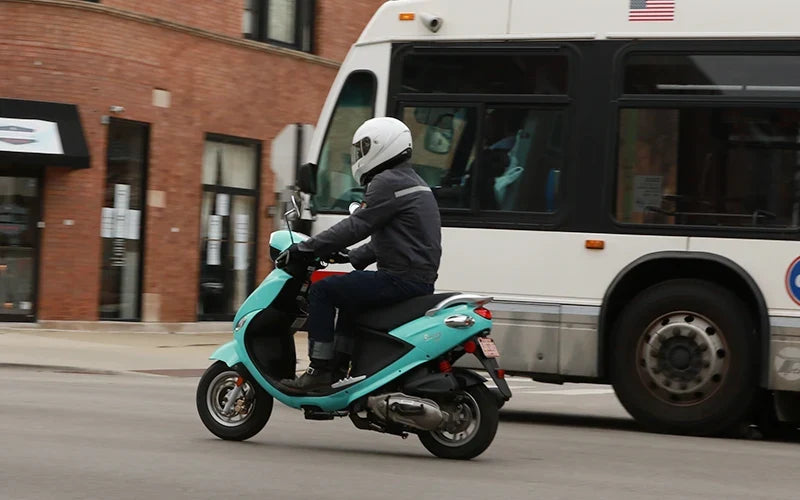
If you're thinking about using a scooter to get around the city, you might have one pretty important question:
Are scooters safe for city riding?
The short answer is: scooters can be a safe and practical way to get around the city when they're ridden responsibly and the rider understands the risks of riding in traffic.
Like motorcycles, bicycles, and cars, scooters require you to pay attention to your surroundings and make smart decisions. Scooters also have some characteristics that make them particularly well suited to urban transportation, including their compact size, maneuverability, and relatively modest speeds compared with larger motorcycles.
Whether you're commuting to work, running errands, or just exploring your city, safe scooter riding starts with knowing what to expect.
Why Are Scooters Popular for City Riding?
Scooters were practically made for getting around town.
They're compact, maneuverable, easy to park, and generally use less fuel than a full-size car. Their step-through design makes them easy to get on and off, while automatic transmissions make them approachable for many new riders.
That's part of what makes scooters like the Genuine Buddy 50, Buddy 125, and Buddy Kick 125i popular choices for urban transportation. Each offers a different level of performance while keeping the simple, approachable scooter format.
Genuine also offers larger options, such as the Buddy 170i and Hooligan 170i, for riders whose city riding includes faster roads, longer commutes, or more hills.
But city riding comes with its own challenges.
Traffic, intersections, parked cars, pedestrians, road debris, potholes, wet pavement, and drivers who aren't expecting a scooter can all create hazards.
Knowing how to recognize and manage those situations is a big part of riding safely.
What Makes City Scooter Riding Different?
City riding is different from riding on a quiet country road.
Urban riders have to constantly monitor what's happening around them.
Common city riding challenges include:
- Heavy traffic
- Vehicles changing lanes
- Cars turning across your path
- Drivers opening parked-car doors
- Pedestrians crossing unexpectedly
- Potholes and road damage
- Road debris
- Wet or slippery pavement
- Construction zones
- Railroad and trolley tracks
- Buses and large vehicles
- Distracted drivers
The key is to expect that other road users may not see you.
That doesn't mean you need to be nervous every time you ride. It means staying alert and giving yourself enough time and space to react.
Are Scooters Safe in Traffic?
Scooters can be safely ridden in city traffic, but riders need to understand that they're smaller and less visible than cars and trucks.
One of the most important habits you can develop is making yourself predictable.
Ride in a consistent manner, follow traffic laws, signal your intentions, and avoid sudden movements.
Don't weave through traffic simply because your scooter is small enough to fit.
Instead, ride like a vehicle and make sure other drivers have a reasonable opportunity to understand what you're doing.
Choosing the Right Scooter for City Riding
Not every city ride is the same, so the scooter that makes sense for one rider may not be the best choice for another.
For example, a rider sticking to neighborhood streets and shorter trips may find a Genuine Buddy 50 or RoughHouse 50 to be a great fit. Both are compact 50cc scooters designed around lightweight, responsive urban riding.
If your commute involves longer distances, hills, or faster city roads, stepping up to something like the Buddy 125 or Buddy Kick 125i gives you more engine performance.
For riders who regularly encounter faster roads or want additional performance, the Buddy 170i or Hooligan 170i can provide another step up.
The important thing isn't simply choosing the biggest scooter available.
Choose a scooter that has enough performance for the roads you actually plan to ride.
Be Visible
Visibility is one of the biggest considerations when riding a scooter in a city.
A scooter takes up less space on the road than a car, which means another driver may not notice you as easily.
You can improve your visibility by:
- Using your headlights
- Wearing bright or reflective gear when appropriate
- Positioning yourself where you're visible to surrounding traffic
- Avoiding riding in vehicle blind spots
- Using your turn signals
- Making eye contact with drivers when appropriate
- Leaving yourself an escape route when possible
Don't assume that because you can see another vehicle, its driver can see you.
Wear the Right Gear
You don't need to dress like you're preparing for a motorcycle race every time you ride to the grocery store.
But you should wear appropriate protective equipment every time you ride.
At a minimum, that means a properly fitted helmet that meets applicable safety standards.
Depending on your riding conditions, additional protective equipment can include:
- Eye protection
- Gloves
- Long pants
- Long sleeves or a riding jacket
- Over-the-ankle footwear
- Reflective or high-visibility clothing
The right gear doesn't make you invincible. It simply gives you another layer of protection if something goes wrong.
Follow the Speed Limit
One advantage of a scooter for city riding is that you don't necessarily need to be traveling at high speeds to get where you're going.
Follow the posted speed limit and adjust your speed when conditions require it.
Slow down for:
- Heavy traffic
- Poor visibility
- Wet roads
- Construction
- Rough pavement
- Busy intersections
- Pedestrian-heavy areas
- Tight turns
Speed affects how much time you have to react.
Riding a little slower when conditions are difficult can give you more time to identify and respond to hazards.
Watch the Road, Not Just the Traffic
City roads can be full of hazards that don't have anything to do with other vehicles.
Potholes, broken pavement, gravel, leaves, standing water, sewer covers, painted road markings, and railroad tracks can all affect a scooter.
Scooter wheels are smaller than car tires, so road imperfections can have a greater effect on the rider.
Look farther ahead instead of focusing only on the few feet directly in front of you. That gives you more time to identify obstacles and choose a safe path around them.
Be Careful Around Parked Cars
Parked cars create several potential hazards for scooter riders.
A person could open a door into your path. A car could pull out of a parking space without seeing you. A pedestrian could step into the street between parked vehicles.
Give parked cars enough space whenever possible and watch for signs that someone may be about to enter or exit a vehicle.
Take Extra Care at Intersections
Intersections deserve your full attention.
A significant amount of urban traffic crosses paths at intersections, and drivers may turn across your path without noticing a smaller vehicle.
As you approach an intersection:
- Reduce speed when appropriate.
- Watch vehicles that may turn across your path.
- Look for pedestrians.
- Check for vehicles entering from side streets.
- Don't assume another driver will yield simply because they should.
- Be prepared to stop.
A green light doesn't mean you should stop paying attention.
Watch for Large Vehicles
Buses, trucks, delivery vehicles, and other large vehicles create additional challenges for scooter riders.
Large vehicles can have substantial blind spots, and their size can make it difficult for a driver to see a scooter nearby.
Avoid lingering beside large vehicles whenever possible. If you need to pass, do so safely and predictably.
Also remember that large vehicles can create wind effects and may kick up debris from the road.
Be Careful on Wet Roads
Rain changes the way your scooter interacts with the road.
Wet pavement can reduce traction and make braking distances longer. Painted lines, metal covers, leaves, and other surfaces can become particularly slippery when wet.
When riding in wet conditions:
- Reduce your speed.
- Increase following distance.
- Brake smoothly.
- Avoid sudden steering inputs.
- Be especially careful around painted surfaces and metal covers.
- Give yourself extra time to react.
If conditions become severe, the safest choice may be to wait them out.
Know Your Scooter
A scooter is only as safe as the condition it's in and the person operating it.
Before riding, make sure your scooter is properly maintained.
Pay attention to:
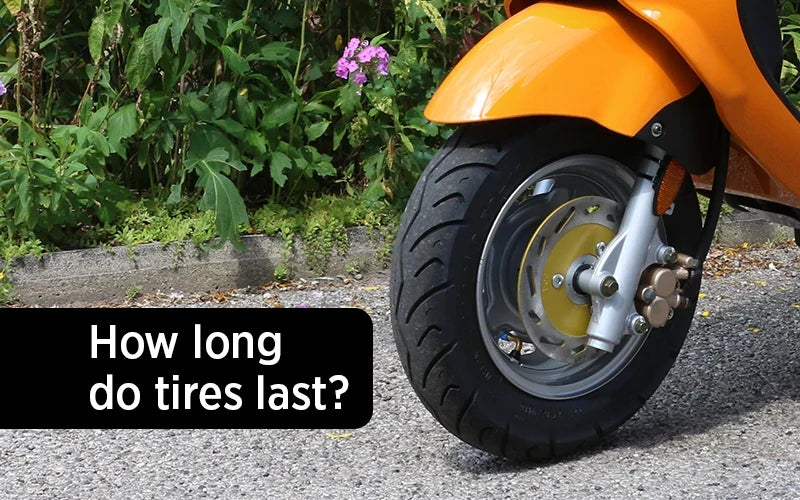
- Tire condition and pressure
- Brake operation
- Headlights and other lights
- Turn signals
- Horn
- Mirrors
- Throttle operation
- Fluid levels
- Battery
- Suspension
- Steering
Whether you're riding a Buddy 50 around the neighborhood or commuting on a Buddy 170i, basic maintenance matters.
If something doesn't feel right, don't ignore it.
A strange noise, soft brake lever, damaged tire, or steering problem is worth addressing before you head into city traffic.
Practice Before You Commute
If you're a new rider, you don't have to learn everything during your Monday morning commute.
Find a quiet area where you can become comfortable with your scooter before dealing with busy traffic.
Practice:
- Starting and stopping
- Smooth acceleration
- Braking
- Turning
- Slow-speed maneuvering
- Using your turn signals
- Looking over your shoulder
- Parking
- Getting comfortable with the controls
You should feel comfortable operating the scooter before adding heavy traffic to the equation.
Formal rider training can also be a great way to develop good habits and learn defensive riding techniques.
Ride Defensively
Defensive riding basically means assuming that something unexpected could happen and leaving yourself enough time and space to respond.
For example, don't assume:
- The car beside you sees you.
- The vehicle approaching an intersection will stop.
- A parked car won't pull out.
- A pedestrian won't cross.
- A driver will use their turn signal.
- The road ahead is free of debris.
You don't need to be paranoid.
You just need to pay attention and have a plan.
Is a Scooter Safer Than a Motorcycle?
It's difficult to make a blanket statement that one type of vehicle is always safer than another.
Scooters and motorcycles come in many different sizes and designs, and rider behavior plays a major role in safety.
Scooters can have advantages for urban transportation because many models have relatively modest engine sizes, automatic transmissions, accessible seating positions, and easy low-speed maneuverability.
But a scooter is still a motor vehicle, and riders don't have the same physical protection that people have inside a car.
That's why proper training, protective gear, responsible speeds, good visibility, and defensive riding are so important.
What About a 50cc Scooter?
A 50cc scooter can be an appealing option for city transportation, particularly for riders whose local roads and regulations are well suited to a smaller-displacement scooter.
Genuine's Buddy 50 and RoughHouse 50 are both 50cc two-stroke scooters. Their compact size and responsive performance make them particularly fun for shorter trips and lower-speed urban riding. Genuine currently describes these models as lightweight and responsive options for city streets.
However, a 50cc scooter isn't appropriate for every road or traffic situation.
Before choosing a scooter, consider the speed of the roads you plan to ride, your typical commute, hills, traffic conditions, and local laws.
If your route regularly involves faster roads, a larger-displacement scooter may be a better fit.
What About a 125cc or 170cc Scooter?
Moving up in engine size can make sense when your city riding includes longer distances, hills, faster traffic, or frequent two-up riding.
Genuine's Buddy 125 and Buddy Kick 125i offer more performance than a 50cc scooter while retaining the convenience and maneuverability of a scooter. The current Genuine lineup lists the Buddy 125 at 124.9cc and the Buddy Kick 125i at 124.9cc.
For riders who want even more performance, the Buddy 170i and Hooligan 170i step up again.
The right engine size isn't about having the most power possible. It's about having enough power for your roads and riding conditions.
What Scooter Is Best for City Riding?
There's no single best scooter for every city rider.
Consider:
Engine size: Smaller scooters can be great for slower urban streets, while larger engines provide more power for faster roads and hills.
Size and weight: A lighter scooter can be easier to maneuver and park.
Storage: Under-seat storage, racks, topcases, and other accessories can make a scooter much more useful for commuting and errands.
Comfort: If you're riding every day, seating position, suspension, and ergonomics matter.
Fuel economy: Efficient scooters can make frequent city riding inexpensive compared with driving a car.
Local laws: Make sure the scooter you choose is appropriate for the roads you intend to use and meets your state's requirements.
Are Scooters Safe for Beginners?
A scooter can be a good entry point into two-wheeled transportation, but being comfortable with the controls doesn't mean you're automatically ready for busy traffic.
New riders should spend time learning how the scooter handles before riding in challenging traffic conditions.
Take it slow, practice defensive riding, and consider professional rider training.
There's no prize for becoming comfortable as quickly as possible.
The Bottom Line
Are scooters safe for city riding? Yes, scooters can be a safe and practical option for urban transportation when they're properly maintained and ridden responsibly.
The biggest factors aren't simply the scooter itself. Your speed, visibility, protective gear, riding habits, experience, and ability to anticipate what other road users might do all matter.
Whether you're riding a Buddy 50 on neighborhood streets, a Buddy Kick 125i on your daily commute, or a Hooligan 170i across town, the fundamentals remain the same: wear a proper helmet, follow traffic laws, stay visible, maintain your scooter, watch the road, and give yourself enough space and time to react.
Once you develop good riding habits, a scooter can be a fun, practical way to get around the city while spending less time sitting in traffic.





Leave a comment
This site is protected by hCaptcha and the hCaptcha Privacy Policy and Terms of Service apply.