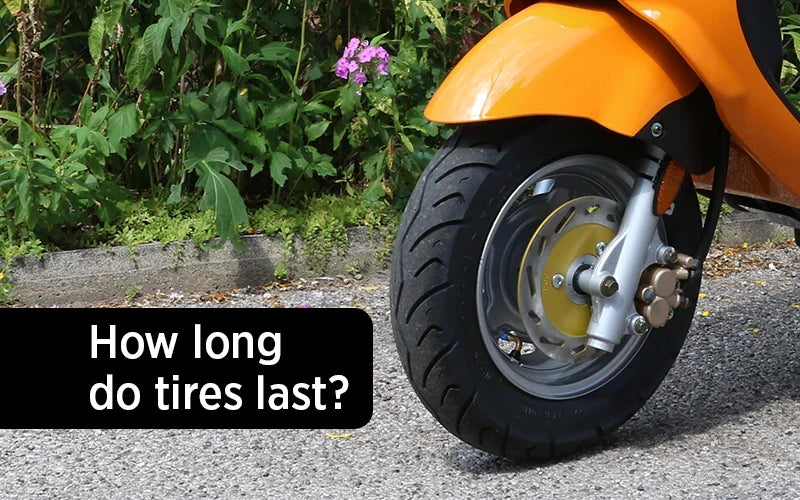
Your scooter's tires are one of its most important components. They're the only parts of your scooter that are constantly in contact with the road, so keeping them in good condition is an important part of regular scooter maintenance.
But how long do scooter tires actually last?
There's no single mileage or time limit that applies to every scooter tire. Tire life depends on several factors, including how much you ride, tire pressure, road conditions, riding style, storage, and the age and condition of the tire itself.
A tire can still have plenty of tread but need to be replaced because the rubber has deteriorated with age. That's why knowing how to inspect your scooter tires is just as important as keeping track of your mileage.
How Many Miles Do Scooter Tires Last?
Scooter tires can last several thousand miles, but there's no universal mileage figure that tells you exactly when a tire needs to be replaced.
A tire's lifespan can vary based on:
- How often you ride
- The type and construction of the tire
- Tire pressure
- Rider and passenger weight
- Road conditions
- Riding speed
- Acceleration and braking habits
- Exposure to sunlight and weather
- How the scooter is stored
- Tire age
A scooter used every day for commuting may wear its tires much faster than one that's only ridden occasionally.
That's why tire condition is more important than mileage alone when determining whether your tires need to be replaced.
How Do You Know When Scooter Tires Need to Be Replaced?
You don't have to wait until your tires are completely worn out before replacing them.
Regularly inspect your tires and look for signs of excessive wear, damage, or aging.
Check the Tread
The tread is the patterned portion of the tire that contacts the road.
As you ride, the tread gradually wears down. Scooter tires have tread wear indicators that provide a visual reference for when the tire has reached its wear limit.
If the tread has worn down to the wear indicators, the tire should be replaced.
Don't rely solely on how much tread appears to be left. Always follow the tire manufacturer's recommendations for tread depth and replacement.
Look for Cracks or Dry Rot
Tires can deteriorate even when they haven't been ridden very much.
Inspect the tire carefully for cracks, splitting, or other signs of rubber deterioration, especially along the sidewalls and between the tread blocks.
This can be particularly important for scooters that aren't ridden regularly or spend a lot of time sitting outside.
Low mileage doesn't necessarily mean a tire is in good condition.
Look for Bulges or Deformation
A tire should have a consistent shape around its entire circumference.
If you notice a bulge, bubble, deformation, or other unusual change in the shape of the tire, don't ignore it.
These can indicate internal tire damage. Have the tire inspected by a qualified professional and replace it if necessary.
Check for Cuts, Punctures, and Embedded Objects
Take a look at your tires for cuts, punctures, nails, glass, or other objects that may have become embedded in the tread.
Not every tire puncture can or should be repaired. Damage to certain areas of a tire may require replacement.
If you're unsure whether a damaged tire is safe to repair, have it inspected by a qualified tire professional.
Scooter Tire Safety Check: 4 Signs It's Time to Replace Your Tires
A visual inspection is one of the easiest ways to catch potential tire problems before they become bigger issues.
Want to see what to look for? Check out the Scooterworks USA video:
“Scooter Tire Safety Check: 4 Signs It’s Time to Replace Your Tires”
The video walks through four common warning signs that can indicate it's time to replace your scooter tires.
Scooter Tire Safety Check: Learn four common signs that your scooter tires may need to be replaced.
How Old Is Too Old for a Scooter Tire?
Tire age matters even when a tire has relatively few miles on it.
Over time, exposure to sunlight, oxygen, heat, moisture, and changing temperatures can cause rubber to age and deteriorate.
That's why you should pay attention to both the condition and age of your tires.
You can often determine when a tire was manufactured by looking at the DOT identification number on the sidewall.
On many tires, the final four digits of the DOT date code indicate the week and year the tire was manufactured.
For example:
2324
indicates that the tire was manufactured during the 23rd week of 2024.
If you're unsure how to read the date code on your tire, check the tire manufacturer's information or have a qualified professional inspect it.
Does a Scooter Tire Have an Expiration Date?
There isn't a single universal expiration date that applies to every scooter tire.
Tire manufacturers provide their own recommendations regarding tire inspection, service life, and replacement.
Always follow the recommendations provided by the tire manufacturer and your scooter manufacturer's recommendations.
If an older tire shows cracking, deterioration, damage, or excessive wear, it may need to be replaced regardless of how many miles it has traveled.
Why Is Proper Tire Pressure Important?
Maintaining the correct tire pressure is one of the easiest ways to take care of your scooter tires.
Incorrect tire pressure can affect:
- Handling
- Braking
- Stability
- Ride quality
- Tire wear
- Fuel economy
Always use the tire pressure recommended for your specific Genuine scooter.
Don't simply inflate the tire to the maximum pressure printed on the tire sidewall. The maximum pressure listed on the tire is not necessarily the correct operating pressure for your scooter.
Check your tire pressure regularly and, whenever possible, check it when the tires are cold.
Does Riding Style Affect Tire Life?
Absolutely.
How you ride can have a significant impact on how quickly your tires wear.
Frequent hard acceleration, aggressive braking, high-speed riding, and aggressive cornering can all contribute to increased tire wear.
The type of roads you ride on matters, too.
Urban riding can involve frequent stops, starts, turns, and braking. Rough pavement, potholes, gravel, and road debris can also contribute to tire wear or damage.
If you regularly ride in demanding conditions, inspect your tires more frequently.
Can a Scooter Tire Go Bad While Sitting?
Yes.
A scooter that spends most of its time parked isn't necessarily easy on its tires.
Rubber continues to age even when the scooter isn't being ridden. Long periods of exposure to sunlight, heat, weather, and other environmental conditions can contribute to deterioration.
If you store your scooter outside, consider protecting it from prolonged exposure to the elements.
And if your scooter has been sitting for an extended period, inspect the tires before you ride it again.
A scooter with low mileage can still have old tires.
Should You Replace Both Scooter Tires at the Same Time?
Not necessarily.
The front and rear tires can wear at different rates depending on the scooter and how it is ridden. It's possible for one tire to need replacement before the other.
However, if both tires are old, worn, damaged, or showing signs of deterioration, replacing both may be appropriate.
When replacing a tire, make sure the new tire meets the specifications recommended for your Genuine scooter.
This includes things such as:
- Tire size
- Load rating
- Speed rating
- Construction
- Tubeless or tube-type design
If you're unsure which tire is right for your Genuine scooter, consult your owner's manual or contact a Genuine Scooters dealer.
Can Scooter Tires Be Repaired?
Sometimes, but it depends on the type and location of the damage.
A tire professional can determine whether a particular puncture or other type of damage can safely be repaired.
Some damage cannot be repaired and requires tire replacement.
Because tires have such an important role in handling and braking, don't take chances with a tire you're unsure about.
When in doubt, have it inspected by a qualified professional before riding.
How Often Should You Check Your Scooter Tires?
You don't have to wait for a scheduled service appointment to inspect your tires.
It's a good idea to make a quick tire check part of your regular riding routine.
Before riding, check for:
- Proper tire pressure
- Excessive tread wear
- Cracks or dry rot
- Cuts or punctures
- Bulges or deformities
- Uneven wear
- Objects embedded in the tread
Also pay attention to changes in how your scooter feels.
If you notice unusual vibration, handling, instability, or other changes, have the scooter inspected.
What Causes Uneven Scooter Tire Wear?
Scooter tires should generally wear relatively evenly. If you notice significantly more wear in one area, it may be worth investigating.
Uneven tire wear can be related to:
- Incorrect tire pressure
- Wheel alignment
- Suspension components
- Tire or wheel problems
- Riding habits
- Road conditions
Simply replacing the tire may not address the underlying problem.
If a new tire starts wearing unevenly, have the scooter inspected to determine what's causing the problem.
What Should You Look for When Buying Replacement Tires?
When it's time for new tires, don't choose based on size alone.
Start with the tire specifications recommended for your particular Genuine scooter. The replacement tire should be appropriate for the scooter's intended use and meet the necessary load and speed requirements.
Important specifications include:
- Tire size
- Load rating
- Speed rating
- Tire construction
- Intended application
- Tubeless or tube-type design
If you're unsure what tire your Genuine scooter requires, check your owner's manual or contact your local Genuine Scooters dealer.
The Bottom Line
How long scooter tires last depends on much more than mileage.
Riding conditions, tire pressure, storage, tire construction, riding style, and age can all affect how long your tires remain in good condition.
Regularly inspect your scooter tires for worn tread, cracks, dry rot, damage, bulges, and uneven wear. Keep them inflated to the recommended pressure and replace them when they reach their wear limit or show signs of deterioration.
Your tires may be easy to overlook, but they're one of the most important components on your scooter.
When you're not sure about the condition of a tire, have it inspected by a qualified professional before you ride.






Leave a comment
This site is protected by hCaptcha and the hCaptcha Privacy Policy and Terms of Service apply.